




All about CLIA analyzers: Introduction, Principles, and Types
Introduction
Welcome to the world of CLIA (Chemiluminescence Immunoassay) analyzers, the unsung heroes of modern medical diagnostics. In this blog post, we will look at the importance of CLIA analyzers in medicine, catering to medical professionals, patients, and those who want to learn more about healthcare technology. Our journey will begin with an introduction to CLIA analyzers, followed by principles and types, and will conclude with a closer look at the Bard surgical. ,
What are CLIA Machines?
The term "CLIA" primarily refers to the Chemiluminescence Immunoassay technique, which is a highly sensitive and specific method used in a variety of diagnostic tests to detect biological molecules such as hormones, vitamins, drugs, and infectious diseases. CLIA analyzers are sophisticated instruments that are specifically designed to perform these tests. While laboratories that use CLIA analyzers typically follow the Clinical Laboratory Improvement Amendments (regulations that ensure the quality and accuracy of laboratory testing), the two terms are not interchangeable.
Working principles of CLIA Machine.
Chemical Reaction with Light Emission: Think about a glow stick. Snap it open to make it glow. Something similar happens when using a CLIA analyzer. The special chemicals in the test mix act as the "snap" in the glow stick. When they come across the target molecule (the one being tested for), they initiate a chemical reaction. This reaction produces a temporary form of the molecule with additional energy (similar to the excited state in your explanation). Unlike the glow stick, this "excited" molecule rapidly releases its energy as light. The brighter the light, the greater the concentration of target molecules in the sample.
Detection and measurement:
Inside the analyzer, a photomultiplier tube (PMT) detector functions as a light sensor, similar to the camera in your phone. This sensor is extremely sensitive, detecting even single photons. With each pulse of light from the reaction, the PMT sends a signal that becomes stronger or weaker as the light intensity increases. This signal is then converted into a computer-readable number, allowing it to calculate the concentration of the target molecule in your sample.
Types of CLIA Machine.
Not all CLIA machines are created equally. They range in size, automation level, and application. Here's a look at the diverse world of these instruments.
- Benchtop Machine: These larger, more powerful instruments are commonly found in central laboratories and are capable of handling a large number of tests.
- Fully Automated Machine: These self-sufficient machines complete the majority of steps without the need for manual intervention, making them ideal for high-throughput environments such as large hospitals.
- Point-of-Care (POC) Machine: These analyzers are compact and portable, delivering rapid results closer to patients, often in clinics or doctor's offices.
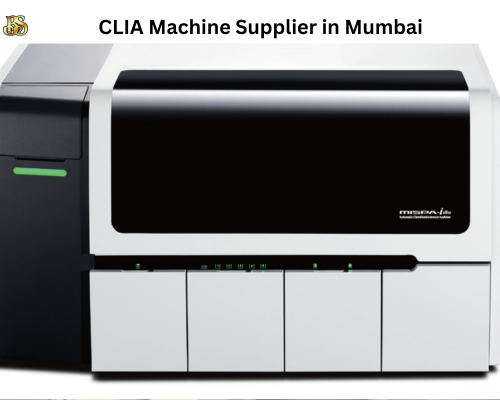
Why should you choose a CLIA machine supplier in Mumbai?
- 1. Access to a broad range of products and services. Mumbai is a major hub for medical equipment suppliers, with a diverse selection of CLIA machines from various manufacturers. This gives you access to the most recent technologies and models, allowing you to select the best solution for your laboratory's requirements. Suppliers in Mumbai also provide a variety of services, including installation, training, and maintenance, to ensure that your CLIA machine runs smoothly.
- 2. Competitive pricing. You can take advantage of competitive pricing because Mumbai has a large number of suppliers. Suppliers frequently offer discounts and promotions to attract customers, allowing you to purchase CLIA machines at a reasonable cost.
- 3. Local Support and Expertise. Choosing a CLIA machine supplier in Mumbai ensures that you have access to local support and expertise. In the event of any technical issues or maintenance needs, you can easily contact the supplier for prompt assistance. This eliminates the hassle of dealing with suppliers in different regions or countries.
- 4. Faster delivery and installation. Choosing a supplier in Mumbai can result in faster delivery and installation of your CLIA machine. This is because the supplier is closer to your laboratory, which reduces travel time. This allows you to start using your CLIA machine as soon as possible.
- 5. Strengthened Relationships Working with a local supplier in Mumbai can help you establish stronger relationships. This can result in improved communication, personalized service, and potential savings on future purchases.
- 6. Contributions to the Local Economy By selecting a CLIA machine supplier in Mumbai, you are supporting the local economy. This encourages job creation and helps local businesses thrive.
Conclusion
Choosing the right CLIA machine supplier in Mumbai is critical for achieving accurate and dependable diagnostic results in healthcare and laboratories. A high-quality CLIA machine improves efficiency, precision, and ease of use, which leads to better patient care. When choosing a supplier, consider product quality, after-sales service, technical support, pricing, and industry reputation. Investing in the right supplier means securing the future of healthcare diagnostics. Take the time to research, compare options, and select a reputable provider to ensure long-term efficiency and accuracy in your testing processes.